The FIFA World Cup has once again reminded football fans why it remains the biggest sporting event on the planet. Four weeks into the tournament, unforgettable goals, dramatic knockout matches and world-class performances have produced one of the most competitive World Cups in recent memory.
While every successful team relies on collective effort, certain players have consistently risen above the rest. Some have delivered match-winning goals, others have dominated midfield battles, while a handful have produced defensive masterclasses that kept their nations alive.
This editorial ranking highlights the players who have had the greatest influence on the tournament after the completion of the first quarter-final. The rankings are based on overall performances, consistency, influence on results, leadership, attacking and defensive contributions, and performances in high-pressure knockout matches. It is an editorial opinion and not an official FIFA ranking.
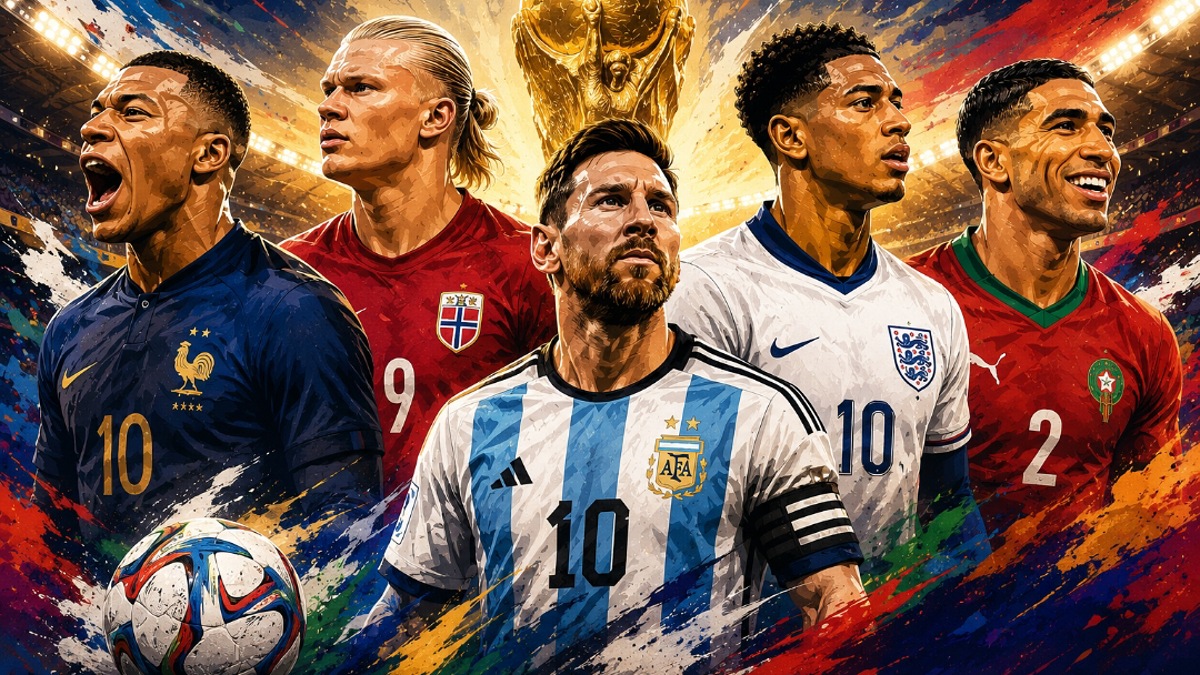
1. Kylian Mbappé (France)
If there was any doubt that Kylian Mbappé remains football’s biggest big-game player, the quarter-final against Morocco settled it once again.
After seeing an early penalty saved, Mbappé responded like champions do. Rather than disappearing from the game, he became France’s driving force, scoring a brilliant opening goal before creating Ousmane Dembélé’s second as Les Bleus secured a 2-0 victory and booked their place in the semi-finals. The performance also kept him among the leading contenders for both the Golden Boot and the Golden Ball.
Throughout the tournament, Mbappé has combined explosive pace with remarkable composure inside the penalty area. His movement constantly stretches defensive lines, while his ability to produce moments of brilliance under pressure continues to separate him from almost everyone else in world football.
With France now only two wins away from another World Cup title, Mbappé remains the player every opponent fears most.
2. Erling Haaland (Norway)
Norway’s remarkable run to the quarter-finals has surprised many, but Erling Haaland has shown exactly why he is regarded as one of the world’s most complete strikers.
His goals have been important, but his influence extends well beyond finishing. Defenders have struggled to cope with his physical presence, movement inside the box and ability to create space for teammates.
Norway’s clash with England promises to be one of the tournament’s biggest quarter-final storylines, with Haaland carrying his country’s hopes into one of the biggest matches in Norwegian football history.
3. Achraf Hakimi (Morocco)
Although Morocco’s World Cup journey ended in the quarter-finals, Achraf Hakimi leaves the tournament having enhanced his reputation as one of the finest full-backs in the world.
Throughout the competition, Hakimi balanced defensive discipline with relentless attacking runs. Few defenders have contributed as much in transition while still maintaining defensive stability against elite opposition.
His leadership helped Morocco once again compete with football’s traditional powers, and his performances have been among the tournament’s most consistent.
4. Ousmane Dembélé (France)
Ousmane Dembélé has quietly produced one of the finest tournaments of his international career.
His goal against Morocco rewarded another outstanding display in which he constantly stretched defenders, created dangerous situations and linked brilliantly with Mbappé. His direct running has given France an attacking dimension few teams can match.
Rather than relying solely on individual dribbling, Dembélé has shown improved decision-making and composure in the final third, making him one of the tournament’s most influential wingers.
5. Jude Bellingham (England)
England continue to rely heavily on Jude Bellingham’s extraordinary maturity.
Whether recovering possession, driving through midfield or controlling the tempo of matches, Bellingham has demonstrated why many consider him one of the world’s complete midfielders.
England now face Norway in a quarter-final that will see Bellingham renew his rivalry with former Borussia Dortmund teammate Erling Haaland, adding another fascinating storyline to the tournament.
6. Lionel Messi (Argentina)
Even at this stage of his legendary career, Lionel Messi continues to influence games in ways few footballers ever have.
Argentina’s progress has once again highlighted his intelligence, creativity and ability to produce decisive moments under pressure. Rather than relying purely on pace, Messi controls matches through positioning, vision and exceptional decision-making.
His experience could prove invaluable as Argentina continue their pursuit of another World Cup title.
7. Pedri (Spain)
Spain’s midfield has been built around Pedri’s calmness in possession.
His ability to dictate the rhythm of matches, escape pressure and create opportunities between defensive lines has made him central to Spain’s success.
With Spain preparing for a huge quarter-final against Belgium, Pedri will once again be expected to control one of the tournament’s biggest midfield battles.
8. Michael Olise (France)
Michael Olise has emerged as one of France’s breakout stars.
His creativity, technical ability and composure under pressure have given France another attacking weapon capable of unlocking organised defences.
Against Morocco, his influence in possession helped France dominate long periods of the game, with several analysts highlighting his midfield contribution despite Mbappé naturally taking the headlines.
9. Yassine Bounou (Morocco)
Goalkeepers rarely dominate headlines after defeat, but Yassine Bounou deserves enormous credit for his performances.
Against France, he saved Mbappé’s first-half penalty and produced several outstanding saves that prevented the scoreline from becoming significantly heavier. Throughout the tournament, he consistently gave Morocco a platform to compete against stronger attacking sides.
His tournament once again confirmed why he remains one of international football’s most reliable goalkeepers.
10. Harry Kane (England)
Harry Kane continues to combine leadership with elite centre-forward play.
Rather than simply finishing chances, Kane regularly drops deeper to connect England’s attack, creating opportunities for teammates while remaining one of the tournament’s most dangerous goalscorers.
His experience will be crucial as England attempt to overcome Norway and move one step closer to another World Cup final.
Honourable Mentions
Several players narrowly missed this ranking but have produced excellent tournaments:
- Kevin De Bruyne (Belgium)
- Julián Álvarez (Argentina)
- Rodri (Spain)
- Emiliano Martínez (Argentina)
- Aurélien Tchouaméni (France)
Each has played an important role in helping their nation reach the latter stages of the competition.
The Race for Individual Awards
With the tournament entering its decisive stage, the races for the Golden Boot and Golden Ball remain wide open. Mbappé strengthened his position with another decisive display against Morocco, while players including Lionel Messi, Erling Haaland and Harry Kane remain capable of producing match-winning performances during the remaining knockout rounds.