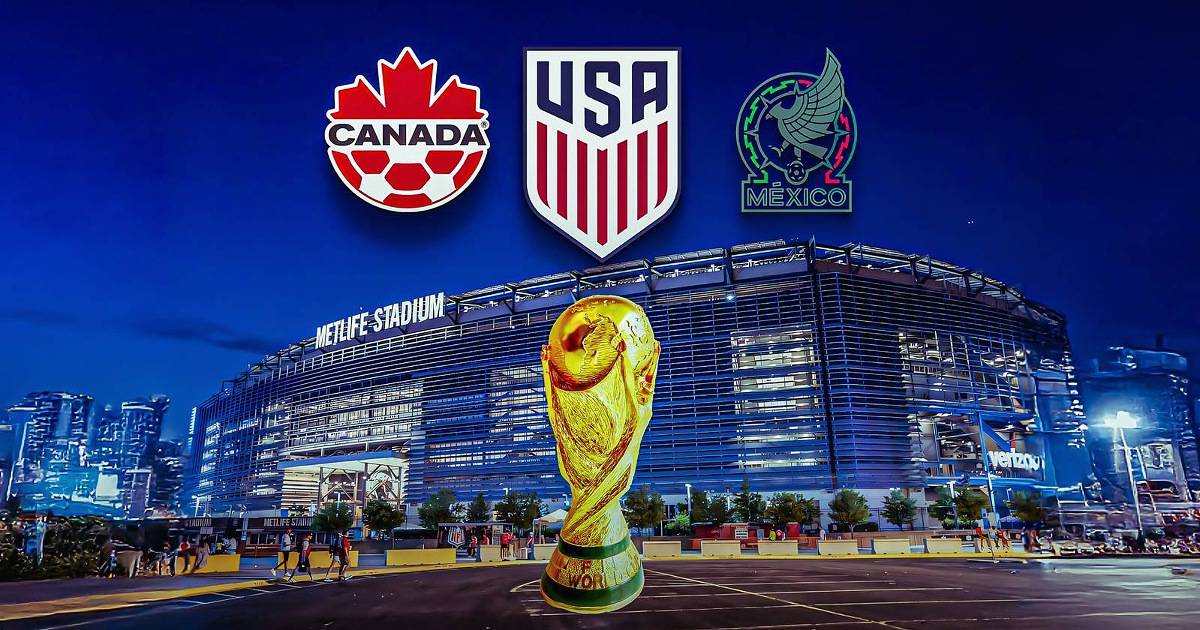
The 2026 FIFA World Cup is played across 16 stadiums in 16 cities spanning three countries. The venues range from the legendary Estadio Azteca in Mexico City, the only stadium in the world to have hosted two World Cup finals to the ultra-modern SoFi Stadium in Los Angeles, which cost $5.5 billion to build.
Together they form the most geographically spread and architecturally diverse collection of World Cup venues ever assembled. This guide covers every venue, what makes it special, what matches it hosts, and what fans can expect on match day.
United States Venues (11 Stadiums)
1. MetLife Stadium — East Rutherford, New Jersey
Capacity: 82,500 | Matches Hosted: 8 (including the Final)
The centrepiece of the entire tournament. MetLife Stadium hosts the World Cup Final on July 19, as well as both semi-finals within the same venue cluster, giving the New York/New Jersey metropolitan area the most prestigious fixtures of the tournament. The championship match at MetLife Stadium on July 19 is one of the most anticipated moments in sports history. The stadium also hosted Brazil vs Morocco in the group stage, one of the tournament’s most anticipated opening round games. The home of the New York Giants and New York Jets, it sits in the New Jersey meadowlands with stunning skyline views of Manhattan from the upper levels.
2. AT&T Stadium — Arlington, Texas
Capacity: 80,000 (expandable to 100,000) | Matches Hosted: 8 (including a Semi-Final)
The home of the Dallas Cowboys, nicknamed “Jerry World” after owner Jerry Jones. AT&T Stadium features a retractable roof and the world’s largest column-free interior. It hosts England vs Croatia on June 17, one of the tournament’s most historically loaded opening fixtures as well as Argentina vs Austria, and a semi-final. Its sheer scale and extravagance make it one of the most visually impressive venues in world sport. The massive video screens suspended over the pitch are 160 feet wide and weigh 1.2 million pounds.
3. SoFi Stadium — Inglewood, California
Capacity: 70,240 | Matches Hosted: 7
The most expensive stadium ever built at $5.5 billion. SoFi Stadium opened in 2020 and features a transparent ethylene tetrafluoroethylene roof that allows natural light while providing full weather protection. The US’s opening match against Paraguay is here on June 12, as is the Germany vs Ecuador group decider on June 26. Located near LAX airport in Inglewood, it sits close to a beach community that will make the World Cup experience uniquely Californian for visiting fans.
4. NRG Stadium — Houston, Texas
Capacity: 72,220 | Matches Hosted: 7 (including a Quarter-Final)
Houston tops the matchday value index, meaning it is the cheapest place to watch the World Cup of all 16 cities. Hotels average $173 per night and stadium concessions cost approximately $2.79 for a beer. NRG Stadium has a retractable roof, essential given Houston’s notorious summer heat and humidity. It hosts Germany’s opening match against Curacao and Portugal vs DR Congo.
5. Mercedes-Benz Stadium — Atlanta, Georgia
Capacity: 71,000 | Matches Hosted: 6
One of the most architecturally celebrated sports venues in the United States, featuring a unique eight-panel retractable roof that opens like a camera aperture. Spain plays both their first and second group stage games here, vs Cape Verde and vs Saudi Arabia, taking advantage of the air-conditioned interior in Georgia’s summer heat. Atlanta Hartsfield-Jackson International Airport is one of the world’s busiest, making Atlanta one of the most accessible host cities for international fans arriving from Africa, Latin America, and Europe.
6. Arrowhead Stadium — Kansas City, Missouri
Capacity: 76,416 | Matches Hosted: 6
Consistently rated one of the loudest stadiums in the world. Arrowhead has broken the world record for crowd noise on multiple occasions and the noise levels during Argentina’s opening game against Algeria on June 16 will be extraordinary. The home of the Kansas City Chiefs, it is an open-air venue which creates the most raw, authentic stadium atmosphere of any venue in the tournament. Argentina vs Algeria and Argentina vs Jordan are both here, making it Argentina’s group stage home.
7. Lumen Field — Seattle, Washington
Capacity: 69,000 | Matches Hosted: 6
A distinctive stadium in the heart of Seattle, close to the waterfront and the city’s iconic skyline. Belgium vs Egypt and Morocco vs Haiti are among the fixtures here. Seattle’s large East Asian and West African diaspora communities will create a uniquely diverse crowd atmosphere across its fixtures. The venue is known for some of the most intense noise levels in American sport due to its enclosed design and proximity to the field of play.
8. Gillette Stadium — Foxborough, Massachusetts
Capacity: 65,878 | Matches Hosted: 6
Located between Boston and Providence, Gillette Stadium serves as the northeastern hub for the tournament alongside MetLife. England vs Ghana on June 23 is here, as is the France vs Norway group stage finale on June 26. Boston’s enormous student and Irish-American population will ensure strong English-language attendance, and proximity to universities creates a cosmopolitan crowd atmosphere for the European and South American-heavy fixtures.
9. Lincoln Financial Field — Philadelphia, Pennsylvania
Capacity: 68,532 | Matches Hosted: 6
The home of the Philadelphia Eagles hosts France vs Iraq and Switzerland vs Bosnia in the group stage. Philadelphia is one of America’s most football-passionate cities with a large Italian-American and Latin American community. The stadium sits adjacent to Citizens Bank Park (baseball) and the Wells Fargo Center (basketball/hockey) in a sporting campus known as South Philly’s Sports Complex.
10. Hard Rock Stadium — Miami Gardens, Florida
Capacity: 65,326 | Matches Hosted: 7 (including the Third Place Play-off)
Miami’s tropical climate creates a unique atmosphere for evening World Cup matches. The stadium hosted Super Bowl LIV and is the home of the Miami Dolphins. Colombia vs Portugal on June 27 is the highest-profile group stage fixture here. The third place play-off on July 18 is also at Hard Rock. Miami’s enormous Latin American community, particularly Cuban, Venezuelan, Colombian, and Argentinian populations — means almost every match at this venue will have an electric South American atmosphere.
11. Levi’s Stadium — Santa Clara, California
Capacity: 68,500 | Matches Hosted: 6
Located in the heart of Silicon Valley, Levi’s Stadium is the home of the San Francisco 49ers and sits close to Apple’s headquarters and the Santa Clara Convention Center. It hosts Qatar vs Switzerland and Austria vs Jordan in the group stage. The Bay Area’s enormous South Asian and East Asian tech worker communities will make this venue’s crowd one of the most globally diverse at the tournament.
Mexican Venues (3 Stadiums)
12. Estadio Azteca — Mexico City
Capacity: 87,500 | Matches Hosted: 5 (Tournament Opener)
The most iconic football stadium in the world. Mexico City Stadium becomes the first venue in history to host matches across three World Cups, joining 1970 and 1986. Diego Maradona’s Hand of God and Goal of the Century happened here. Two World Cup finals were played here. The altitude of 2,240 metres above sea level creates physiological challenges for visiting teams and a unique atmospheric pressure that contributes to the roar of 87,500 Mexican fans. The opening match of the 2026 World Cup, Mexico vs South Africa takes place here on June 11. No other venue on earth carries the same historical weight.
13. Estadio Akron — Guadalajara
Capacity: 49,850 | Matches Hosted: 6
Guadalajara is the cheapest FIFA 2026 host city overall, with daily costs starting from around $85 for budget travelers. The Estadio Akron is a modern, spectacular venue owned by Chivas de Guadalajara, Mexico’s most popular club. Spain vs Uruguay, one of the group stage’s most anticipated matches, is here on June 26. The city of Guadalajara sits at 1,500 metres above sea level, providing cooler temperatures than Mexico City and a more manageable altitude for visiting players.
14. Estadio BBVA — Monterrey
Capacity: 53,500 | Matches Hosted: 5
One of Latin America’s most modern and impressive club stadiums, home to Club de Futbol Monterrey. Nestled against the Sierra Madre mountains in northeastern Mexico, the stadium offers one of the most dramatic natural backdrops of any World Cup venue. The proximity to the US-Mexico border, Monterrey is less than three hours from Laredo, Texas makes it uniquely accessible for North American fans. Czech Republic vs Mexico, one of the Group A fixtures, is held here.
Canadian Venues (2 Stadiums)
15. BMO Field — Toronto
Capacity: 30,000 (expanded to 45,000 for the World Cup) | Matches Hosted: 6
The home of Toronto FC and the most football-specific venue in the tournament. BMO Field sits on the Toronto waterfront with views of Lake Ontario. The second opening ceremony takes place here on June 12 before Canada vs Bosnia and Herzegovina. Toronto’s extraordinary multicultural diversity, with large South Asian, Caribbean, South American, and European communities, creates one of the tournament’s most cosmopolitan crowd atmospheres.
16. BC Place — Vancouver
Capacity: 54,500 | Matches Hosted: 6
A retractable roof stadium in downtown Vancouver surrounded by mountains on three sides. BC Place is the most visually dramatic stadium setting in the tournament, a modern arena at the foot of the Coast Mountains with the Pacific Ocean visible in the distance on clear days. Australia vs Turkey and Canada vs Qatar are among the fixtures here. Vancouver’s large Chinese and South Korean communities will make several Group B and D fixtures particularly vibrant occasions.
Sources: ESPN, World Cup Opening Ceremony, SmarterTravel, Wego