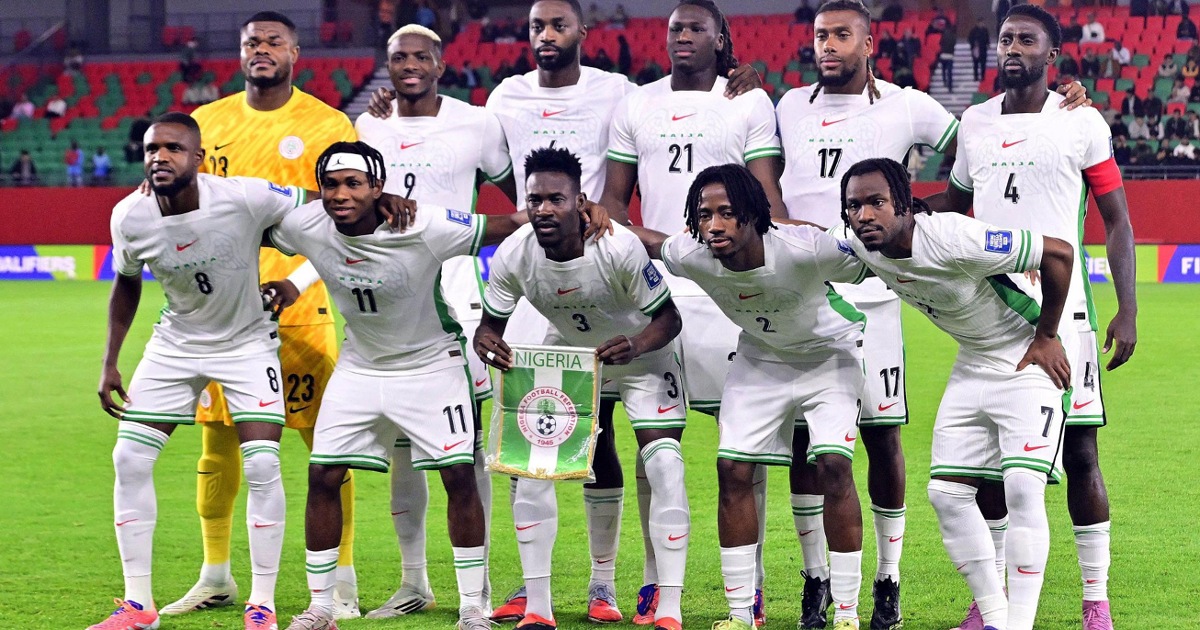
Nigeria should be at the 2026 World Cup. By talent alone, the Super Eagles have enough quality to compete with almost any team at the tournament. Victor Osimhen is one of the most feared strikers in European football. Ademola Lookman won the African Player of the Year award. Victor Boniface, Calvin Bassey, Frank Onyeka, and Wilfred Ndidi are all established performers at the top level of European club football. The squad, on paper, belongs at a World Cup.
But football is not played on paper. And Nigeria will not be in North America this summer. For the second consecutive time, the Super Eagles have failed to qualify, missing out in 2022 and again in 2026. The Nigeria Football Federation issued a public apology to the nation, describing the loss to DR Congo as a moment of profound sadness for Nigerian football.
This is the full story of how it happened. Not the voodoo excuse. Not the bad luck narrative. The real reasons.
How the Qualifying Campaign Unfolded
Nigeria were drawn into CAF Group C alongside South Africa, Benin, Rwanda, Lesotho, and Zimbabwe a group that, on paper, they should have won comfortably. They did not.
The campaign started catastrophically. Under Portuguese coach Jose Peseiro and then Super Eagles legend Finidi George, Nigeria managed just three points from their first four qualifying games, one win and three draws, including a draw at home against Zimbabwe and a draw away to Lesotho. By the time new coach Eric Chelle took charge in January 2025, Nigeria had gathered only three points from a possible 12. The damage was already done before their most important games had even been played.
Chelle steadied the ship after his arrival. Nigeria went unbeaten in regular time in all the matches he managed, winning four and drawing two in the group stage. There was renewed energy, improved attacking play, and a stronger sense of belief. But the early damage inflicted by his predecessors was irreversible. Nigeria finished second in Group C, one point behind South Africa, and were forced into the CAF playoff round, a high-stakes single-elimination contest that had no margin for error.
The Night in Rabat That Broke Nigeria’s Heart
The CAF playoff final brought Nigeria face to face with DR Congo in Rabat, Morocco on November 16, 2025. It was not played in Nigeria. It was not played in Congo. It was played on neutral ground and what unfolded became one of the most painful nights in Nigerian football history.
Nigeria were out. DR Congo were through. The Super Eagles had travelled to Morocco with the entire nation behind them and come home empty-handed.
What happened next made things worse. Coach Eric Chelle, facing the cameras in the aftermath, suggested that DR Congo had used spiritual or supernatural means, what he referred to as “Congolese voodoo” to influence the penalty shootout. The claims were widely criticised and seen by many as a distraction from more practical issues, such as preparation and composure under pressure. Former DR Congo head coach Florent Ibenge called the accusations “nonsense.” Nigerian fans were divided, many embarrassed by the comments, others frustrated that the NFF did not immediately distance themselves from them.
The Real Reasons Nigeria Did Not Qualify
The voodoo accusation made headlines. But it was a distraction from the genuine, structural reasons why Nigeria failed. Here is the honest analysis.
1. Three Coaches in One Qualifying Campaign
This is the single most important reason. Nigeria used Jose Peseiro, Finidi George, and Eric Chelle across a single qualifying series. That means three different tactical systems, three different player preferences, three different training methodologies, and three different approaches to man-management, all within the same campaign.
By the time Chelle arrived and began building something real, there were only six games left. The points dropped in the first four games, three draws and a loss under his predecessors left him an impossible mathematical task. He won four of those six remaining games. If he had been in charge from the start, Nigeria would almost certainly have qualified automatically.
2. Dropped Points Against Weak Opponents
The specific results that cost Nigeria automatic qualification are the ones that are hardest to explain. Draws at home to Zimbabwe. Draws away to Lesotho. Draws against Rwanda. These are not results against elite African opposition. They are results against teams that Nigeria, with their squad quality, should be beating comfortably every time they play.
The statement begs the question of where was that calmness and experience when the team was gifting points home and away in the previous games. Former Super Eagles forward Peter Odemwingie said publicly that Nigeria were in danger of an embarrassing second consecutive World Cup absence, specifically blaming poor game management and a lack of tactical identity.
The five draws in qualifying were not against South Africa or Benin, the group’s better sides. They were against opponents ranked far below Nigeria. One extra win in any of those games would have put Nigeria top of their group and directly into the tournament without needing the playoff.
3. Victor Osimhen’s Injuries at Critical Moments
Osimhen is Nigeria’s most important attacking player. His pace, his physicality, and his goal-scoring ability at the highest European level make him the player opposing African defences fear most. But he has struggled with injuries throughout the qualifying period, and crucially, he went off injured at the start of the second half in the decisive playoff game against DR Congo, precisely the moment when Nigeria most needed his quality to change the game in extra time.
Nigeria struggled for fluency after Victor Osimhen went off injured at the start of the second half against DR Congo. Without him, the team’s ability to create clear chances dropped significantly, and the match drifted into extra time and then penalties, the worst possible scenario for a team that had already missed penalties at crucial moments earlier in the campaign.
4. Penalty Shootout Failures
Nigeria’s elimination came on penalties. But this was not a random misfortune. Penalty preparation, the physical and psychological preparation for a shootout is a specific, trainable skill that top nations invest heavily in. England brought in sports psychologists after their Euro 2020 shootout win to embed the confidence and technique required. Argentina’s Emiliano Martinez is the world’s best at reading penalty takers. These are deliberate investments.
Nigeria’s 2026 World Cup dream ended in heartbreak, not due to controversy, but on penalties in a tightly contested match that the Super Eagles had the ability to win in regular time. Two missed penalties, including the decisive one by Semi Ajayi in sudden death came from players who should have been mentally prepared for exactly that moment. The failure is not entirely individual. It reflects a preparation environment that did not adequately equip the team for the highest-pressure scenario the game can produce.
5. The NFF’s Chronic Instability
Former Nigeria and Everton striker Victor Anichebe pointed to chronic incompetence as the root of Nigeria’s problems after the Super Eagles failed to qualify. That assessment is harsh but not unfair. The Nigeria Football Federation’s track record of making and changing coaching appointments at the worst possible moments, of failing to build long-term planning structures, and of prioritising short-term political considerations over football development has undermined every qualifying campaign for years.
The decision to appoint Finidi George, a Super Eagles legend and genuine hero as national team coach while he was managing a Nigerian club was well-intentioned but poorly executed. His inexperience at international level showed in the results. The subsequent appointment of Chelle was the right decision. Making it four games earlier would have changed everything.
The Voodoo Controversy: What It Really Tells Us
When Chelle suggested after the DR Congo defeat that supernatural forces had influenced the penalty shootout, the reaction was immediate and widespread. Football commentators across Africa and Europe ridiculed the claim. Former DR Congo coach Florent Ibenge dismissed it as nonsense. Nigerian fans were divided between defensiveness and embarrassment.
But here is what the voodoo comment actually reveals, beyond the immediate controversy. It reveals a coaching staff and a football federation that, in the moment of their greatest failure, looked outward for explanations rather than inward. The missed penalties were explained by spirituality rather than preparation. The tactical failures were attributed to external forces rather than internal decisions. The coaching changes, the dropped points, and the structural failures of Nigerian football were not addressed, they were obscured by a narrative that placed the blame elsewhere.
Nigeria entered the qualifiers with brilliant individuals but lacked cohesion, clarity and continuity. In the moments when mental resilience mattered most, in the pressure cookers, in the late pushes, in the penalty shootout that lack of structure became evident. That is the honest summary. Not voodoo. Lack of structure.
What Nigeria’s Absence Means for the Tournament
For a country of 220 million people, the most populous nation in Africa missing back-to-back World Cups is a national embarrassment that goes beyond football. Nigeria’s World Cup appearances in 1994, 1998, 2002, 2010, and 2014 were events that united the country across ethnic, religious, and regional lines in a way that few things can. That unifying moment will not happen in 2026.
Is There Hope for the Future?
The good new is that Eric Chelle is still in charge and is building something real. They went the entire AFCON 2025 competition unbeaten, winning five consecutive matches before draws against Morocco in the semifinals and Egypt in the third-place playoff that went to penalties. Beyond the numbers, the team also passed the eye test, playing a brand of football that Super Eagles fans had not seen since the 1990s. All of that is mostly down to Chelle.
The Super Eagles have Osimhen, Lookman, Boniface, Savio, and a generation of elite European-based players who will be approaching their peak years when 2030 qualifying begins. The talent pool is as rich as it has ever been. The qualifying campaign for the 2030 World Cup to be held in Morocco, Portugal, Spain, and potentially South Africa represents Nigeria’s chance to correct the failures of 2022 and 2026 simultaneously.
But for that to happen, the NFF needs to commit to stability. No more coaching changes mid-campaign. No more short-term political appointments. No more blaming external forces for internal failures. What Nigeria needs now is a reset, a structural recalibration, a clear identity, and long-term planning that matches the nation’s enormous potential. When the Super Eagles eventually return to the World Cup, it will not be a quiet re-entry. They will return with force, with swagger, and with the unmistakable vibrance that only Nigeria brings to the world stage.
The 2026 World Cup starts on June 11 without Nigeria. That absence will be felt by every African fan who remembers what the Super Eagles look like on that stage at their best. The question is whether it hurts enough at the federation level, not just the fan level to ensure it never happens again.
Sources: SuperSport, AllAfrica, Africa Soccer, ESPN, Afrik-Foot, Afrik-Foot, ESPN, Tips GG, Pulse Ghana