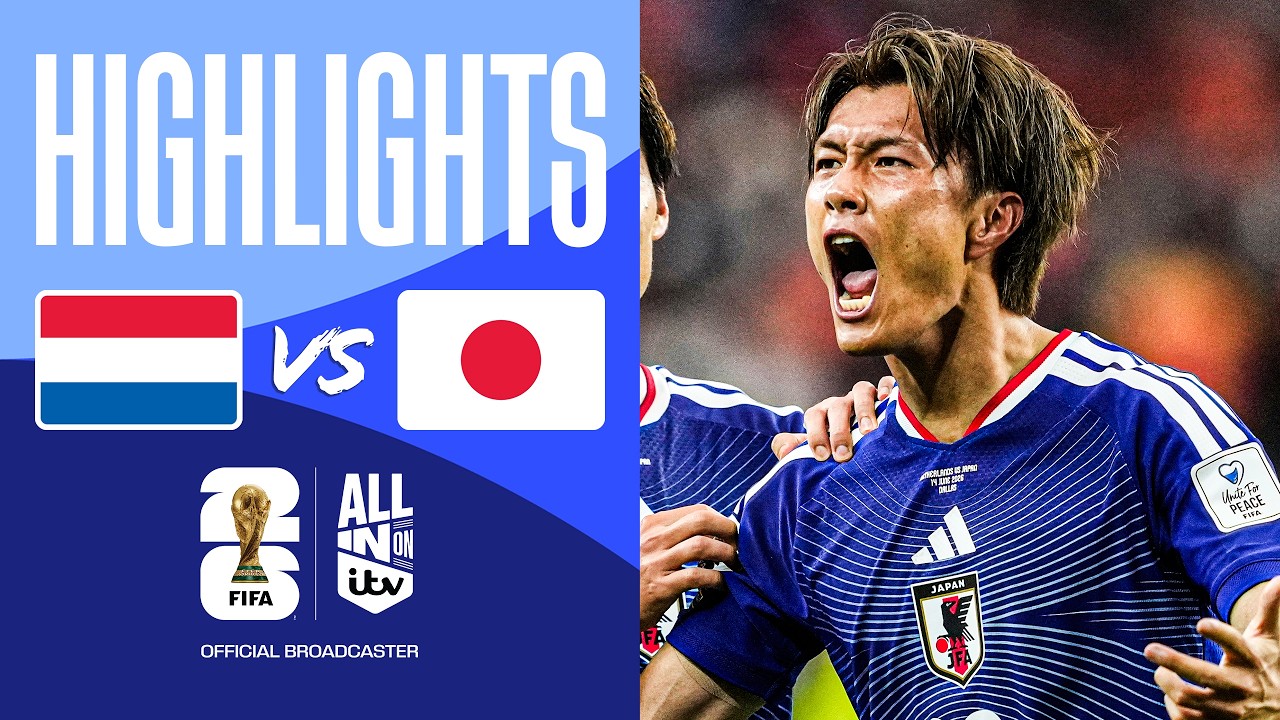
In what was arguably the match of the tournament so far, the Netherlands and Japan played out a breathtaking 2-2 draw at Dallas Stadium on Sunday, June 14, in a Group F opener that had everything.
Ronald Koeman’s Oranje twice took the lead and twice were pegged back by a Japan side that refused to accept defeat, with Daichi Kamada’s 89th-minute header deflection in off a corner sending the Samurai Blue faithful into delirium and the Dutch dressing room into quiet disbelief. Virgil van Dijk and Crysencio Summerville provided the goals for the Netherlands. Keito Nakamura’s deflected equaliser and Kamada’s late intervention ensured Japan left Arlington with a point that feels enormous in the context of a group that also includes Sweden and Tunisia.
Neither side will be entirely satisfied. The Netherlands looked on course for three valuable points when Summerville curled in their second with 26 minutes remaining. Japan, however, never stopped pressing and were rewarded in the cruelest possible way for the Dutch, with Bart Verbruggen unable to keep out a flicked header that looped into the roof of his own net. It was the kind of finish that makes World Cup football so unpredictable, so dramatic, and so compelling.
Watch Netherlands vs Japan Highlights
Match Details
- Competition: 2026 FIFA World Cup, Group F
- Date: Sunday, 14 June 2026
- Venue: Dallas Stadium, Arlington, Texas, USA
- Kick-off: 3:00 PM local time (9:00 PM BST)
- Result: Netherlands 2-2 Japan
Goalscorers
- Netherlands: Virgil van Dijk (50′), Crysencio Summerville (64′)
- Japan: Keito Nakamura (57′), Daichi Kamada (89′)
First Half: Tactical Chess, No Goals
For 45 minutes, both managers got more or less what they wanted. Ronald Koeman set the Netherlands up in a 4-2-3-1 shape, with Frenkie de Jong and Ryan Gravenberch providing the midfield base and Tijjani Reijnders given licence to push higher in support of an attacking line of Crysencio Summerville, Cody Gakpo, and Donyell Malen behind lone striker. The Oranje had possession, structure, and the majority of the territorial advantage, completing passes with confidence and working Japan’s back line without consistently breaking through.
Japan, operating under Hajime Moriyasu in a disciplined defensive block, were happy to absorb. The Samurai Blue arrived at this tournament without captain Wataru Endo, who was forced out of the squad through injury and subsequently announced his international retirement at 33. It was a significant absence in the engine room, but Kaishu Sano and Daichi Kamada filled the void competently alongside Keito Nakamura, with Takefusa Kubo and Daizen Maeda offering width and pace on the counter. Ayase Ueda, who plays his club football at Feyenoord in the Netherlands, led the line with intelligent movement that occasionally unsettled the Dutch back four.
Shots were five to three in the Netherlands’ favour at half-time, and the expected goals data reflected a game that was competitive but not particularly open. Japan had been disciplined, organised, and dangerous when they moved forward. The Netherlands had been fluid, technically accomplished, and unable to find the final ball. The second half, it was clear, would be decisive.
Second Half: Four Goals in 39 Minutes
The game transformed completely five minutes after the restart. Ryan Gravenberch, who was outstanding throughout the evening in a box-to-box role that carried the ball intelligently and released runners with crisp passes, delivered a precise cross from deep that found Virgil van Dijk arriving at the back post. The Liverpool centre-back, captaining the Netherlands with his usual authority, powered a header past Zion Suzuki to give the Oranje a deserved lead on 50 minutes. It felt like the moment that would settle the contest.
Japan’s response came within seven minutes. Keito Nakamura received the ball on the edge of the Dutch penalty area and drove a low shot that clipped the foot of Jan Paul van Hecke on its way past Bart Verbruggen. The deflection took the ball into the bottom corner, leaving the Brighton goalkeeper with no realistic chance. At 1-1, Dallas Stadium erupted, and the tension that had simmered through the first half came to a full boil.
The Netherlands reasserted their authority on 64 minutes through one of the goals of the tournament. Crysencio Summerville, who only made his senior international debut earlier this month and was the youngest and most unpredictable player in the Dutch attack, received a neat pass from Gravenberch on the left edge of the penalty area. He cut inside, shifted the ball onto his left foot, and curled a stunning finish into the far corner past Suzuki’s despairing dive. It was a goal of composure and quality from a player still finding his feet at international level, and it sent the orange-clad sections of the stadium into raptures.
The Oranje appeared to be closing in on three points. Koeman’s side managed the game with increasing confidence, Micky van de Ven and van Dijk looked solid at the back, and Japan were beginning to fade physically. But Japan had not read the script. With six minutes of added time signalled and the match seemingly heading toward a Dutch victory, Junya Ito drove a corner into the six-yard box. Substitute Koki Ogawa rose brilliantly, got his head to the ball, and the deflection looped off Daichi Kamada and past a helpless Verbruggen into the roof of the net.
The goalkeeper had no chance with the final touch, but the execution from Japan, to manufacture a chance from a set piece in the 89th minute after being outplayed for long stretches, was testament to Moriyasu’s preparation and Japan’s relentless work ethic. The final whistle confirmed the draw. Both teams shared the points. Neither was entirely satisfied. Both had reason for optimism.
The Key Performer: Ryan Gravenberch
If one player defined how this match was played, it was Ryan Gravenberch. The Liverpool midfielder was everywhere in Dallas, winning the ball, releasing it quickly, progressing up the pitch with purpose, and creating both Dutch goals with passes that cut through Japan’s defensive structure. His assist for van Dijk’s header was whipped in with perfect weight and timing. His pass to Summerville before the second goal opened the pocket of space that allowed Summerville to cut inside and shoot. Gravenberch played the full ninety minutes and looked every inch a midfielder capable of deciding knockout games in this tournament. If the Netherlands are to go deep, his form will be central to that ambition.
Japan’s Resilience: A Dark Horse Worth Taking Seriously
The pre-tournament billing of Japan as potential dark horses was already credible on paper. They arrived having beaten England, Scotland, and Iceland in their final preparations, and having qualified as the first non-host nation to confirm their place in the tournament. Their performance in Dallas did nothing to diminish that reputation. Moriyasu’s side were outpossessed 60-40 across the 90 minutes, but they created chances, took their goals calmly, and showed the tactical flexibility and mental strength that distinguished them at the 2022 World Cup, where they beat Germany and Spain in the group stage. Kamada, Nakamura, and Kubo were all dangerous when Japan moved forward, and Zion Suzuki made several important saves to keep the Netherlands from adding a third.
The absence of Kaoru Mitoma, who was ruled out of the tournament through injury before kick-off, and the loss of Wataru Endo from the squad earlier, meant Japan were without two of their most influential players. To draw 2-2 with the Netherlands in those circumstances was a statement.
Key Stats
- All four goals were scored in the second half. The first half ended goalless.
- Netherlands had 54% possession against Japan’s 37%, with 9% contested.
- The Netherlands had 10 total attempts, 6 on target. Japan had 9 attempts, 2 on target.
- Netherlands expected goals: 0.79. Japan expected goals: 0.54.
- Ryan Gravenberch provided the assists for both Dutch goals.
- This was Crysencio Summerville’s first World Cup goal in only his second senior international appearance.
- Kamada’s goal came in the 89th minute, one of the latest equalisers in this tournament’s opening round of fixtures.
- Japan had never beaten the Netherlands before this tournament. They remain unbeaten in the fixture after the draw.
- Micky van de Ven received a yellow card for a tactical foul on Junya Ito.
- Kaoru Mitoma (Japan) was ruled out of the tournament before kick-off through injury.
Starting Lineups
Netherlands (4-2-3-1)
Bart Verbruggen; Denzel Dumfries, Jan Paul van Hecke, Virgil van Dijk, Micky van de Ven; Frenkie de Jong, Ryan Gravenberch; Crysencio Summerville, Tijjani Reijnders, Cody Gakpo; Donyell Malen
Japan (3-4-3 / 3-4-2-1)
Zion Suzuki; Tsuyoshi Watanabe, Shogo Taniguchi, Hiroki Ito; Takefusa Kubo, Ritsu Doan, Kaishu Sano, Daizen Maeda; Daichi Kamada, Keito Nakamura; Ayase Ueda
What Comes Next for Both Teams
The Netherlands face Sweden on Saturday, June 20 in Toronto. It is a fixture between two sides who will both have processed this result and arrived at the same conclusion: a win in the second group game is now essential. Sweden are dangerous and well-organised, and Koeman will need his side to tighten defensively while retaining the creative energy that Gravenberch and Summerville brought against Japan. Three points in Toronto would put the Netherlands in a very strong position to advance from Group F.
Japan turn their attention to Tunisia, also on June 20, this time in an evening kick-off. On paper, it is the more winnable match in the group, and Moriyasu will know that a win would leave Japan genuinely competing for the top spot in Group F heading into the final round. Having drawn with the Netherlands in the opener, the Samurai Blue will carry real belief into that fixture. The tournament is wide open for them.
This article was updated following the final whistle on 14 June 2026. All statistics and match data are sourced from FIFA, NBC Sports, Sky Sports, and ESPN.