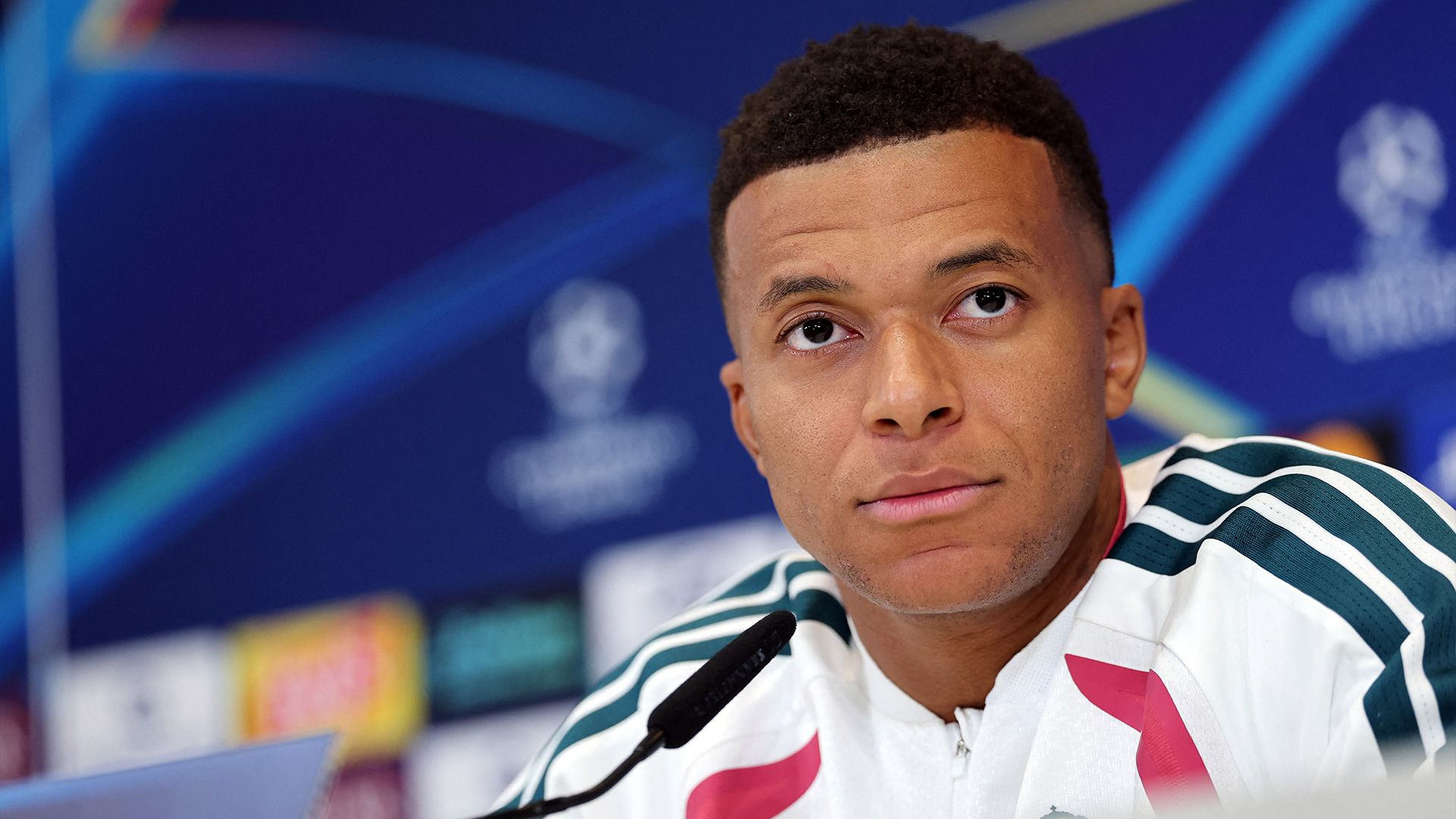
José Mourinho has offered a strong defence of Kylian Mbappé in the Ballon d’Or debate, arguing that a player should not need to win major trophies to be considered the best footballer in the world.
With the conversation surrounding the 2026 Ballon d’Or intensifying, Mourinho believes individual quality should be judged separately from the trophies won by a player’s team. His comments immediately add another dimension to the debate around Mbappé, whose individual performances continue to place him among football’s biggest stars even when team success does not necessarily follow.
Speaking to Canal+, Mourinho was asked about Mbappé’s Ballon d’Or chances and rejected the idea that a trophyless campaign should automatically eliminate a player from consideration. “For me, the best player in the world can have a trophyless season,” Mourinho said. He then strengthened his argument by adding: “You can win everything and still not be the best player in the world.” It is a simple argument, but one that challenges one of the most common ways supporters and voters judge Ballon d’Or candidates.
Mourinho Believes Individual Quality Should Come First
Mourinho’s argument focuses on an important distinction between individual and team achievements. Winning the Champions League, domestic league or an international tournament requires contributions from an entire squad.
Even the greatest player in the world cannot control the performances of his goalkeeper, defenders or teammates, meaning judging an individual award primarily through collective trophies can sometimes create an unfair picture of how well that player actually performed.
The opposite can also happen. A player can collect several major trophies while playing for an exceptional team without necessarily being the outstanding individual footballer in the world. That appears to be the point Mourinho is making. Trophies should certainly strengthen a Ballon d’Or case, particularly when a player is directly responsible for delivering them, but simply being part of a successful team should not automatically place someone ahead of a footballer who performed at a higher individual level.
Mbappé is an obvious example of why the argument generates so much debate. His extraordinary speed, finishing, movement and ability to decide matches have made him one of the defining players of his generation. When evaluating him individually, goals, assists, consistency and performances in major matches all become relevant. Mourinho’s position is that those qualities should not suddenly become less impressive simply because another team lifted more trophies.
Why the Ballon d’Or Debate Becomes Complicated
The Ballon d’Or has always created disagreement because there is no perfect mathematical formula for identifying the world’s best player. Goals can be measured, assists can be counted and trophies can be listed, but comparing players across different positions, teams and competitions inevitably requires subjective judgement. A striker might score 50 goals without winning the Champions League, while a midfielder could score considerably fewer but control the biggest matches on the way to winning several trophies. Deciding which season was better is not straightforward.
Team strength creates another complication. Players representing Europe’s strongest clubs naturally have a better chance of winning major trophies than equally talented footballers playing for weaker teams. If trophies become the dominant criterion, the Ballon d’Or risks becoming an award for the standout player from whichever club wins the Champions League rather than an assessment of the best individual footballer across the entire season.
At the same time, completely ignoring trophies would create problems of its own. Football’s biggest matches provide the greatest pressure, and players who deliver decisive performances in Champions League knockout rounds, league title races or major international tournaments deserve additional recognition. There is a difference between simply collecting medals and being the reason those medals were won. The strongest Ballon d’Or cases therefore usually combine extraordinary individual numbers with performances that directly influence major trophies.
Does Mbappé Need Trophies to Win the Ballon d’Or?
This is where Mourinho’s comments become particularly interesting. Mbappé does not need another trophy to prove that he belongs among the world’s elite players. His individual quality has already been demonstrated across many seasons, while his performances for France on the international stage have shown that he can deliver under enormous pressure. The more difficult question is whether being one of the world’s best is enough to win the Ballon d’Or in a year when another candidate combines similar individual performances with greater team success.
If Mbappé has clearly been the outstanding player across the season, Mourinho’s argument suggests the answer should be yes. A trophyless campaign would not erase exceptional goalscoring numbers, match-winning performances or consistent brilliance. The Ballon d’Or is officially an individual honour, so the central question should remain how well the individual performed rather than simply counting how many medals are sitting in his trophy cabinet.
However, when two candidates have performed at a similar level, trophies can become the deciding factor. If Mbappé and another player produce comparable individual seasons but the other candidate delivers decisive performances while winning the Champions League or a major international tournament, voters will understandably lean towards the player who combined individual excellence with silverware. Mourinho’s argument therefore does not necessarily mean trophies are irrelevant; it means they should not automatically decide who is considered the world’s best footballer.
Mourinho Has Started a Debate Football Fans Will Never Completely Agree On
There is a reason conversations like this appear almost every Ballon d’Or season. Some supporters believe football is ultimately about winning and that the world’s best player should be someone who delivered major trophies. Others believe an individual award should recognise individual performance regardless of whether a player’s teammates were good enough to turn those performances into silverware.
Mourinho clearly leans towards the second interpretation. His comments effectively separate two questions that are often treated as though they are identical: Who had the most successful season? and Who was the best footballer in the world? Sometimes the answer will be the same player. Sometimes it will not.
That is why Mbappé’s Ballon d’Or case cannot simply be reduced to the number of trophies he wins. His goals, consistency, influence on matches and overall level have to be compared with every other leading candidate. Trophies should be part of that discussion, particularly when another player was instrumental in winning them, but they should not automatically end it.
Kylian Mbappé for the 2026 Ballon d’Or — yes or no?